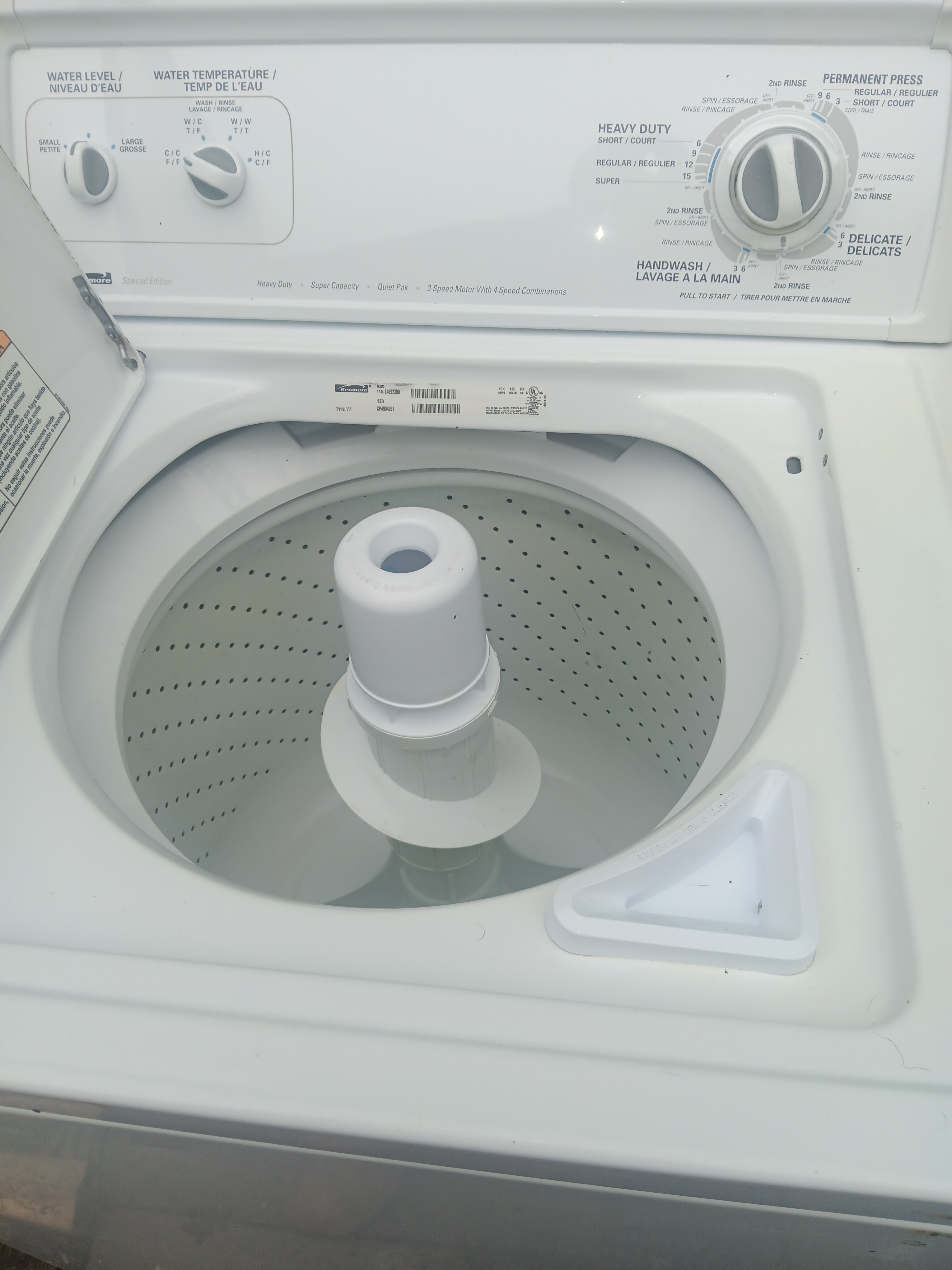
When you’re looking for a washer, one of the first decisions is the type: top-load or front-load. Both work, but they work differently, and which one is right for you depends on how you wash clothes, what you care about most, and how much you want to spend.
Top-load washers are the classic choice. You lift the lid, drop clothes in from the top, and close it. Front-load washers work like most commercial laundromats: you load from the front, and the drum rotates sideways. Both get clothes clean, but the way they clean is very different.
This guide explains the real differences so you can make the right choice for your home.
How They Clean Clothes Differently
Top-load washers work by agitating clothes. A central agitator (a spindle in the middle) twists back and forth while water fills the drum. The movement scrubs clothes against the agitator and against each other. It’s fast and straightforward. Most top-loads finish a load in 35 to 45 minutes.
Front-load washers work by tumbling. The drum rotates horizontally, lifting clothes up and dropping them repeatedly through the water. It’s similar to how a commercial dryer works, but with water instead of heat. This gentler motion is easier on fabrics. Front-loads typically take 50 minutes to over an hour because the water level is lower, so clothes spend more time in direct contact with each other and the detergent.
The agitation method makes a difference. Top-load washers are better at removing heavy dirt and mud. Front-loaders are gentler on delicate clothes and lighter colors. Front-loaders also use less water and less detergent, which means lower utility bills over time.
Water and Energy Use
Front-load washers use significantly less water than top-loaders. A typical top-load uses 40 to 45 gallons per load. A front-load uses 10 to 20 gallons. Over a year of laundry, that difference adds up fast.
Less water means less energy to heat it (if you use hot water), and less water to heat overall. Front-loaders also spin faster, which removes more water from clothes before drying. Clothes dry faster or use less dryer time.
If your utility bills matter, or if you’re renting and trying to keep costs low, a front-load washer saves money every month. Over a year, you might save enough to pay for part of the rental difference.
Top-load washers use more water and energy, but they still work fine. Some people prefer this because they see the higher water level as a guarantee that clothes are getting wet and clean.
Capacity: Washing Larger Loads
Top-load washers typically hold 3.5 to 5 cubic feet of laundry. Front-loaders usually hold 4 to 5.5 cubic feet. These numbers are close, but front-loaders are more efficient with that space. Because they don’t have an agitator taking up space in the middle, they can fit more clothes in the same drum size.
If you have a large family or do fewer but bigger laundry days, a larger-capacity washer saves time. Both types come in large sizes, but front-loaders are generally more efficient at washing large loads.
Durability and Maintenance
Top-load washers are simpler machines. They have fewer moving parts, so there’s less that can break. The agitator is straightforward. The drum is straightforward. They’re reliable and easy to repair.
Front-load washers are more complex. The drum is suspended in a way that allows it to spin horizontally, and the seals need to be maintained to prevent leaks. The water heating system is more complicated. If something breaks, repairs can be more expensive.
This matters for rental. Top-load washers are generally cheaper to maintain, which is one reason rental companies often offer more top-load options. Front-loaders work great, but the rental company knows that maintenance costs will be higher.
Mold and Mildew
Front-load washers can develop mold or mildew inside the rubber seal around the door if they’re not maintained properly. This happens because the lower water level and longer drying time between cycles create conditions where mold can grow.
If you leave a front-loader sitting with wet clothes inside, mold can develop quickly. Some people are bothered by this; others don’t mind because they clean the seal regularly or use a cleaning cycle once a month.
Top-load washers don’t have this issue. They drain completely, and the open-top design allows air to circulate.
Cost Differences
Top-load washers are generally cheaper to buy and cheaper to rent. A basic top-loader rents for $50 to $79 per month. Front-loaders rent for $70 to $99 per month because they’re more expensive to buy and maintain.
If rental cost is your main concern, top-load is the budget option. If you care about water savings and gentle washing, front-load is worth the extra money.
Noise Level
Front-load washers are quieter. The tumbling motion is gentler and makes less noise than the aggressive agitation of a top-loader.
Top-load washers are louder, especially during the spin cycle. Some people notice this; others don’t mind.
If you have a washer in or near a bedroom, or if you run laundry while working from home, the quieter front-loader might be worth the extra cost.
Which Should You Choose?
Choose a top-load washer if:
- You want an affordable monthly rental cost
- You like fast wash cycles (35-45 minutes)
- You’re renting a home and want simplicity
- You have heavy, dirty laundry (work clothes, muddy gear)
- You prefer an open-top design and easy loading
- You want a machine with fewer parts that’s easy to fix
Choose a front-load washer if:
- You want to save money on water and energy bills each month
- You have delicate clothes or light colors you wash often
- You want a quieter washer
- You like a modern, commercial-style machine
- You’re willing to spend a bit more to save on utilities
- You don’t mind a slightly longer wash cycle
The Best Part About Renting
When you rent a washer, you’re not stuck with your choice. If you rent a top-loader and decide you prefer front-load, you can usually upgrade to a front-loader after your rental period. If you rent a front-loader and find the mold maintenance annoying, you can switch to a top-loader.
With Option Appliance rentals in New Brunswick, you have flexibility. Try the type that seems right, and if it doesn’t work for your life, you have options. That’s a big advantage over buying, where you’re committing to that machine for years.
Final Thoughts
There’s no universal “best” washer. The best one is the one that fits how you actually do laundry, your home situation, and your budget. Top-load washers are simpler, faster, and cheaper. Front-load washers save money on utilities and are gentler on clothes.
Both work well. Both will clean your clothes reliably. The choice comes down to your priorities. If you’re unsure, renting lets you try different types without committing to a purchase. That freedom is one of the biggest advantages of appliance rental.